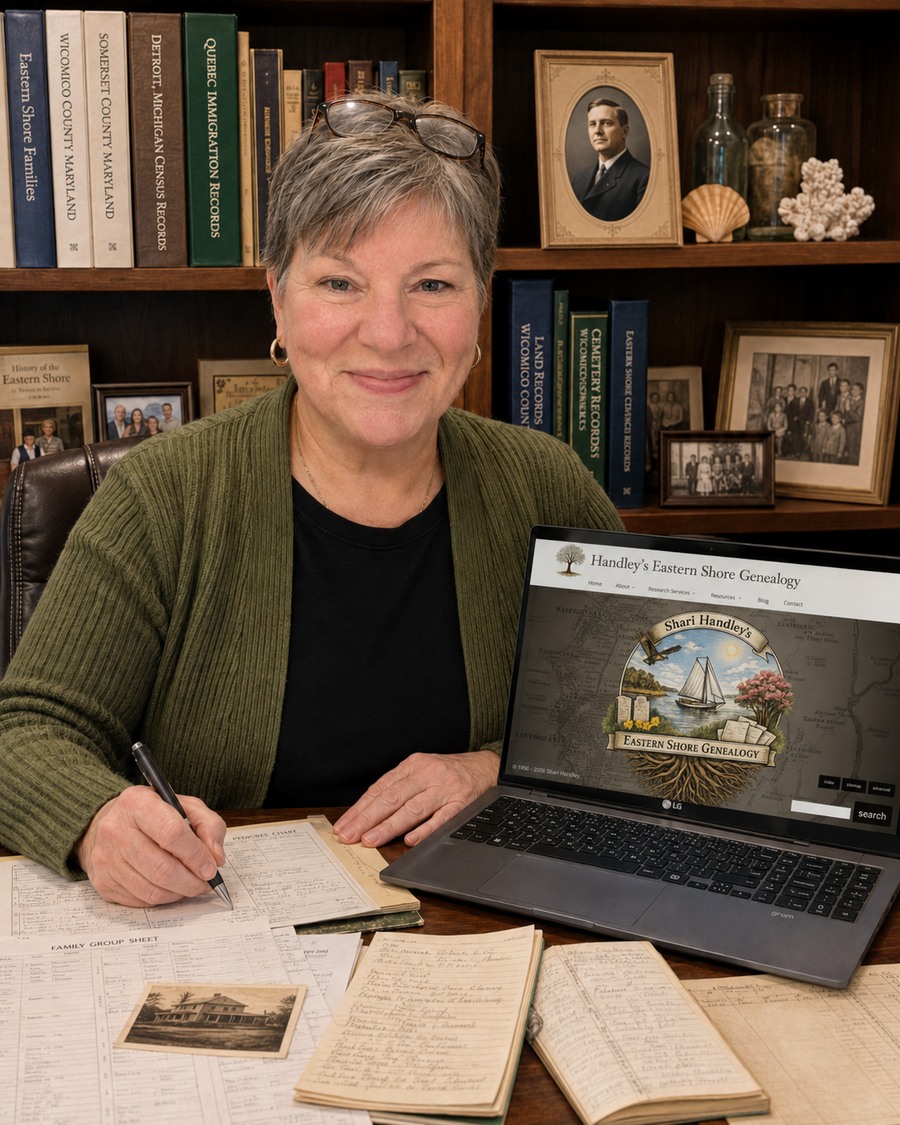
Family has always been at the heart of both my life and my research. I have been a Registered Nurse for over 30 years. My husband, Mike, and I recently celebrated our 40th wedding anniversary, and our two grown daughters share my love of family history and Maryland’s Eastern Shore.
It Started with an Old Photo Album
My interest in history and family history began when I was a little girl. In 1969, my great-aunt Audrey Mezick Moore, who lived in Capitola near Tyaskin, Maryland, died. Among the things my mother received from her estate was an old family photograph album filled with pictures dating from the 1860s through the early 1900s.
I spent hours looking through those photographs and wondering about the people staring back at me. Who were they? How were they related to us? Where had they lived, and what had their lives been like?
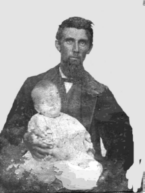
One photograph especially fascinated me: a tintype of my great-grandfather, Luther Franklin Mezick, as an infant, being held by his father, Isaac Francis Mezick. Seeing people from my own family who had lived generations before me made history feel very real. That old album planted a seed that never went away.
Learning to Research
By my late teens, I was actively exploring family history. My family vacationed every year in Ocean City, Maryland, and my Uncle Gene Mezick and I would spend part of those trips visiting old family sites and graveyards in southwestern Wicomico County. Because I lived in Michigan, Uncle Gene became my “eyes and ears” on the Eastern Shore during the rest of the year, gathering information and taking photographs of places I could not easily visit myself.
As a young adult, I began doing more traditional research at the Burton Historical Collection of the Detroit Public Library and at a local Family History Center, where I could use microfilmed records and published genealogical material. By the late 1980s, I had discovered the Research Center for Delmarva History and Culture at Salisbury University, now the Edward H. Nabb Research Center for Delmarva History and Culture. From then on, our Ocean City vacations routinely included a day or two of research there, plus time exploring cemeteries, churches, old home sites, and family places around the Shore.
Then Came Internet Genealogy
In the early 1990s, genealogists began finding one another online. By 1996, I was involved with both RootsWeb and The USGenWeb Project, and I started the LOWER-DELMARVA-ROOTS-L mailing list for people researching families of the Delmarva Peninsula. Over the next several years, the list grew to nearly 700 members.
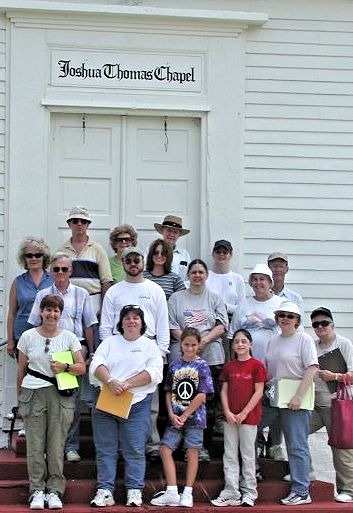
What began as an online community soon became a real-world one. During our yearly trips to the Shore, list members began joining me for CemTreks, where we visited cemeteries, recorded gravestone inscriptions, and photographed burial grounds. We also held informal research sessions at the Nabb Center. Those trips became family experiences, too: my daughters began joining us when they were young and became CemTrek veterans themselves. Those gatherings remain some of my favorite memories from the early days of Internet genealogy.
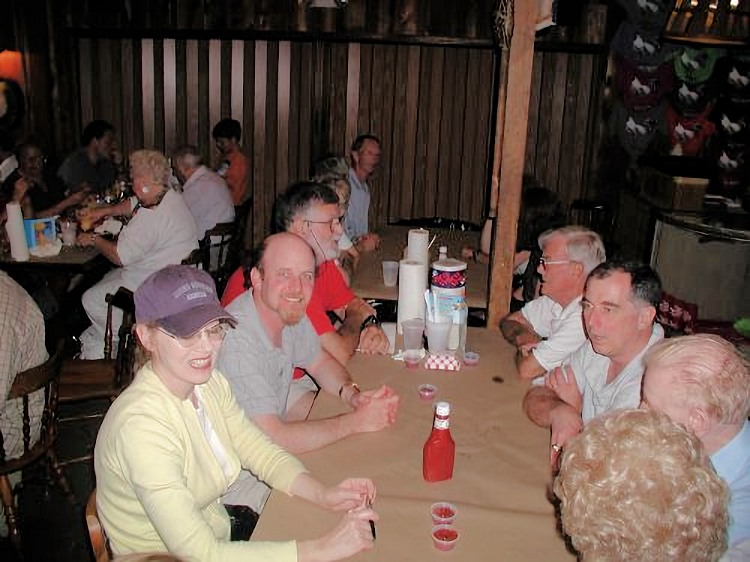
The best part was watching people who had first met through an email list become friends and research companions in person. A day spent trekking through cemeteries was often followed by dinner together, a lot of conversation, and the inevitable comparing of notes about families, places, and the next mystery to chase.
MDGenWeb, DEGenWeb, and USGenWeb
My involvement with USGenWeb grew over the years. I began with county-level work in MDGenWeb, later serving as Assistant State Coordinator under Carol Askey and then as Maryland State Coordinator after Carol stepped down. For several years I was also active in DEGenWeb, serving as Delaware State Coordinator and coordinating the Sussex County project.
At the national level, I served on the USGenWeb Advisory Board in several roles and, in 2004, was elected National Coordinator of The USGenWeb Project, serving through August 2005. Old Advisory Board minutes recently reminded me that I also served for a time as Recording Secretary — a job I had managed to forget completely. Apparently genealogy occasionally involves rediscovering your own history, too.
Today I coordinate the Somerset, Wicomico, and Worcester County MDGenWeb projects. I also continue to maintain projects devoted to cemetery preservation, old photographs, and Lower Delmarva research, including the Paul J. Willing Wicomico Cemeteries Project, the Somerset Cemeteries Project, and the Lower Delmarva Family Album.
Why I Still Do It
In 1997, I wrote an article for the Maryland Genealogical Society Bulletin titled “A World of Eastern Shore Genealogy Available on the Internet.” At the time, genealogy on the Internet was new enough that it needed explaining. The technology has changed almost beyond recognition since then, but the reasons I do this have not.
I believe family history should be preserved, shared, and made accessible. Old photographs should have names attached to them before no one remembers who the people are. Cemetery inscriptions should be recorded before weather and time erase them. Local knowledge matters. And something one researcher shares may someday solve a mystery for someone they have never met.
After all these years, I still get the same thrill from finding an unexpected newspaper article, identifying someone in an old photograph, locating a forgotten grave, or finally connecting two stubborn pieces of evidence.
In many ways, I am still doing exactly what I was doing as a little girl with Aunt Audrey’s photograph album: wondering who those people were, what their lives were like, and how I can keep their stories from being lost.